Posts Tagged ‘Glar’

Local Bon Appetit Food Service Focuses on ‘Social Responsibility’

Wednesday, December 2nd, 2009

Juli Guiffre

Co-Editor in Chief

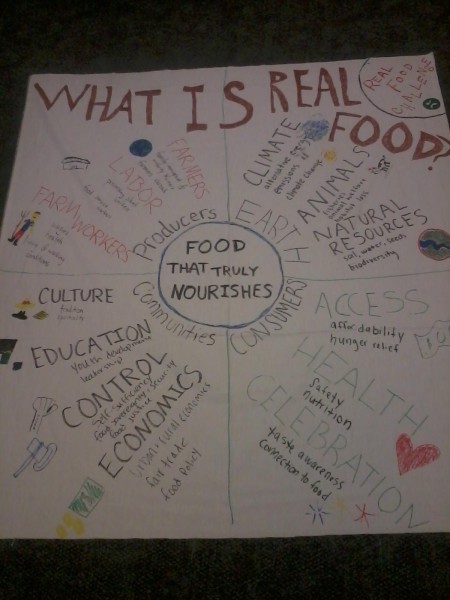
For Bon Appetit food services, social responsibility is the number one priority. Their motto is “food services for a sustainable future.”

According to Normal Zwagil, general manager of Bon Appetit at Goucher College, sustainability refers to food that is “a lower carbon footprint, uses less energy, healthier with respect to environment, individual, and industry.”

Founded by Fedele Bauccio and Ernie Collins in 1987, the company was the first to address the issues related to where our food comes from and how it is grown. Through a program they call “Farm to Fork,” only locally purchased produce raised or grown within 150 miles of the school is used in their dining halls.

They also hold several farmers markets per semester in order to allow the students and surrounding community to know who grows the food they are consuming, including a student who grows her own fruit and jam, Firefly Farm which provides goat cheese, Rosetta Beef that is all natural, Stone Mill Bakery, and Dangerously Delicious Pies.

Zwagil says that Bon Appétit avoids using companies like Purdue Chicken, who doesn’t “raise their chickens humanely. They are mass-produced and raised on a farm where they are not allowed to be chickens. They usually take ill and have to be given antibiotics.

One of the ultimate food conflicts is between big industrial agriculture and if there will ever be a return to small farms. Zwagil says that beef is intrinsically high carbon, and there is an argument that grass-fed beef is more sustainable. Large-scale farms are unable to grass-feed their cows.

Bon Appétit is rBGH free since 2002. Recombinant bovine growth hormone is a genetically engineered hormone injected into dairy caws to artificially increase their milk production.

The company also refuses to use farmed salmon, another growing conflict with large-scale agriculture. Farmed salmon produce waste, and contain PCBs and dioxins that may impair the immune system.

“Salmon swim in their own feces, and farmers bring it to market and color it,” says Zwagil. Bon Appetit only uses seafood purchased in accordance with the Monterey Bay Aquarium’s Seafood Watch guidelines.

Bon Appetit is a chef driven company. They make their food from scratch, and bring in fruit and vegetables that they cut and cook themselves. However, Zwagil says they are not the answer for everyone, especially for large schools, which is why they stick to private colleges and universities like McDaniel.

This type of food service is more expensive than something like Sodexho, however; Zwagil says that their company creates budgets to look at each situation and university uniquely.

An online website, greenreportcard.org, grades colleges on their sustainability. Goucher was given a B+; McDaniel is not on the website. Of the top 25 most sustainable colleges in the nation, about 10 use Bon Appétit for their food services.

The company also puts much effort into garnering response from the students. They created a website called Circle of Responsibility to aid students in learning to grow their own food. They also meet with both the SGA and Student Action Committee to collaborate on a student survey. They then base their business plan around those answers.

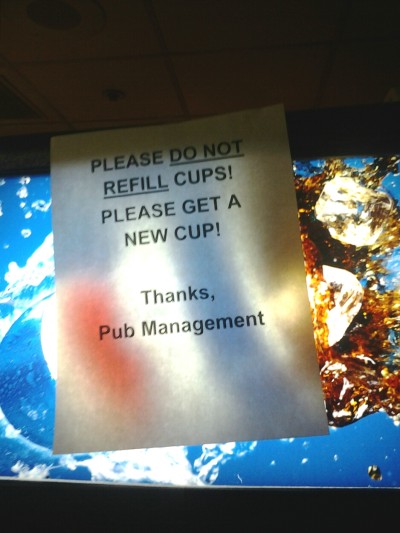
Since 2001, Bon Appétit has been beta testing environmentally friendly disposable plates, cups, bowls, and flatware from renewable sources like corn, sugarcane, and potato starch.

“We tell you what’s in your food and where it comes from,” said Zwagil. “Sodexho just has a different business model, they do prison work, they are more institutional. At some schools they have food courts like you see in the mall. Right now a chef from Thailand is cooking in our kitchen.”

The Students Speak Out:

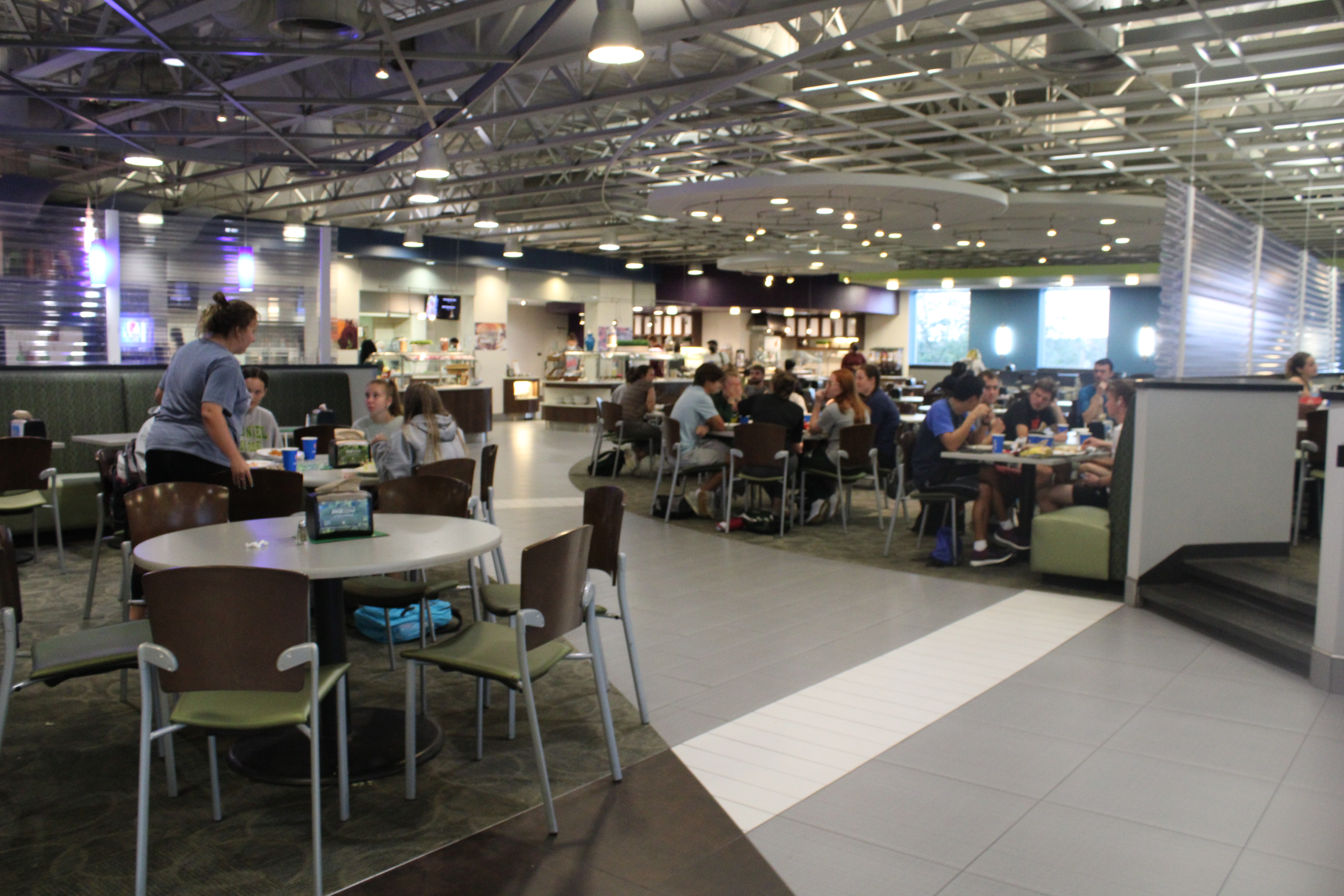
“Personally, I spent the first two years of my college career with stomach problems due to the food offered on this campus. It is either greasy and fried or “healthy” and kind of gross. Glar is a place to socialize, I used to go and just get a drink, then eat in my room. When I got an apartment I was so excited to not have a food plan, so I could first save hundreds of dollars that weren’t worth spending in the first place, and second be able to properly digest.”

· Jen Thompson, ‘10

It seems that with the exception of Sodexho, the world around us is consistently moving towards more organic and healthier food options so it’s strange that Sodexho is not keeping up. It’s a pretty obvious concept to keep up with as well. The amount of grease on and in the food offered in Glar is nothing short of offensive and the salad bar, possibly the only consistent “healthy” food option, can only be described as bland and distastefully unappealing.

· Christopher Rondo, ‘10

As a vegetarian, I have a very hard time finding good food to eat. Only having the option of eating a salad, a sandwich, and a wrap gets old very quickly. It would be so easy for Glar to offer more vegetarian options (such as soups, lasagna, etc), and everyone would be able to eat them. People are going to eat dishes that don’t have meat in them. There’s a belief that vegetarians only eat strange and obscure foods, but this is not true. Almost everything that people eat with meat in it can be made without meat just as easily. I have also experienced many stomach problems due to Glar. When you have a full day of classes the last thing you want to deal with is an unstable stomach. My freshman year I brought Pepto Bismol to Glar with me because I knew I was going to need it.

· Sydney Thro, ‘11

From the Environmental Action Committee:

Sodexho provides a basic service that makes food cheap and easy to prepare. Economically, this looks good–not only does the college save money on the food itself, but it can hire less skilled workers at lower wages. This allows GLAR to be more about quantity rather than quality, stability rather than healthy variety. Unfortunately, all large-scale food providers are going to approach this in the same way. The biggest change if we eliminate Sodexho and move to another big company would probably just be the uniforms.

There are consulting companies out there that help college dining services address these issues. These companies can help colleges link up with local produce (Baughers) and meat providers, rather than using processed staples like chicken patties that ship in from around the country and produce that ships from around the world. A lot of this starts with education, not only of the kitchen staff, but also of students, administration, or whoever is trying to ignite the change. We need to understand the seasonality of different foods, and learn to pattern our eating habits accordingly (unfortunately this means no tomatoes year round, but really good fresh produce while it’s in season). Expecting better food means that we’ll also probably have to learn how to work with less variety on a daily basis. It’s quick and easy to prepare frozen and greasy food like GLAR offers; but as the saying goes, good things take time. Rather than sacrifice quality to quantity (as we do now), we’ll have to learn to sacrifice quantity to quality.

· Ellen Larson, ‘10

  • Share/Bookmark

Glar’s ‘Sandwich Guy’ Leads a Double Life as ‘Family Guy’

Saturday, October 3rd, 2009

Sarah Chavis

Staff Reporter

Kaiser roll. Turkey. Provolone. Lettuce. Tomato. Mayo. Glar’s very own Mark “The Sandwich Guy” Brown memorized this sandwich combination for senior Terre Martin two years ago. “On the first day back to campus, I went into Glar for lunch to get my usual sandwich,” Martin explains. “When it was my turn, I started telling Mark what I wanted, but to my surprise he remembered my sandwich after the entire summer.”Markthesandwichguy2

Martin isn’t the only student Mark can match up to a specific sandwich. There are at least twenty other students on campus that he has also committed to memory.

“I just want the students to feel welcomed,” Mark says. “They have a variety to choose from, and I just want them to want a sandwich made by me.”

That’s why Mark creates all of his sandwiches with such care and precision. “I like to make sure all the vegetables are fresh and ripe,” he says. “No one deserves rotten food.”

When Mark takes off his latex gloves at night and goes home, he’s no longer “The Sandwich Guy;” he becomes “The Family Guy.” As a father of four children, three sons and a daughter ranging from the ages of 3-10, Mark tries to balance his time between his work and kids. Since he doesn’t arrive home until after dinner, he spends the majority of his time with them during the morning, standing at the bus stop corner and sending them off to school for the day.

“I also use my vacation days on holidays and their birthdays,” Mark states. “They only get one day a year dedicated to just them, and I want to be there to spend it with them.”

Mark also uses vacation time and the summers to take the bus to New York City, his second home. While he’s there, he visits with the rest of his family and friends, but what he loves most of all during his visits is…shopping. His other hobbies consist of shooting pool, basketball, fishing, hunting, swimming, working out, and playing horseshoes.

So next time you’re in Glar, and you don’t know what to eat, stop by the sandwich line and ask for Mark. He’ll be sure to take care of all your sandwich needs. Maybe even ask him how is his day is. After all, his favorite part of the job is meeting new students.

  • Share/Bookmark
Switch to our mobile site